Hmm, niin tosiaan, saavuttaakseen shamanistisen kokemuksen, ei suinkaan ole mikään välttämättömyys nauttia enteogeeneja.
Siis tietoisuus, minkä voidaan nyt tässä tapauksessa käsittää olevan kasa atomeja ja hiukkasia ja mikä on siis kokonaisuutena kokonainen universumi missä juuri nyt ihminenkin on täällä linnunradalla ja maapallolla. Shamaanit sanoo, että se on yksi ja sama energia, joka on siis tietoinen olento minkä sisällä ihminenkin on ja kuuluu siihen.
Näihin eri värähtelytasoille tarvii virittäytyä että ne voi havaita, voidaan puhua kai myöskin eri ulottuvuuksista ja siinä voivat tulla käyttöön enteogeenit tai sitten tietenkin muitakin metodeja on...
Nukkumisenkin voisi vielä mainita shamanistisena työkaluna, kun siinä virittäydytään astraalimaailmaan taajuudelle.
Hmm, mutta noista taikasienistä vielä jonkin verran ja niiden käytöstä euroopassa ja muualla
Aika hurja juttu tämä, viittauksia löytyy Afrikasta 10 000 vuotta sitten.
Lainaus:
INTOXICATIONS AND THE OLDEST KNOWN
MUSHROOM CULT IN AFRICA
So far, the mycoflora of the African
continent has been studied only peripherally and
remains largely unknown. During the late 1980s,
Italian mycologist G. Samorini and Terence
McKenna, working independently, found evidence
for the oldest known mushroom cult in Africa.
Their discoveries were not just sensational, but
most surprising as well. On the other hand, it
really shouldn't come as a surprise that the oldest
traces of human contact with mushrooms were
found on the very continent known as the cradle of
humanity.
10,000 Years Old
From 9,000 to 7,000 years ago, the area of
the Sahara - between Tassili (Southern Algeria),
Acacus (Libya) and Ennedi (Chad) - was
populated by human beings who created
magnificent rock drawings, a pictorial legacy that
preserved for posterity impressive images of
everyday life. These pictures tell about a time
when the Sahara was still a blooming garden, a
time when no one even suspected that processes of
erosion and desolation, starting about 3,500 B.C.,
would turn the area into a desert quite hostile to
human life.
The rock drawings date from as far back
as 10,000 B.C. up to the present. Among the
drawings from the Stone Age (7,000-5,000 B.C.),
there are those described as typical of the so-called
"round head phase". They include pictures of
pasture animals as well as evergreen and
deciduous trees. On top of a Sahara plateau, at an
altitude of 6,500 ft., there exist pictures of
mythical beings with anthropomorphic and
zoomorphic attributes which are reminiscent of
early Mexican images: many scenes depict tiny
horned dancers alongside mushrooms. Deities with
masks and horns are seen holding mushrooms in
their hands; sometimes the mushrooms are shown
attached directly to body parts. In addition, those
Stone Age artists created
images of anthropomorphic beings with
mushroom-like heads. There are many other
indications pointing toward the existence of a
comprehensive mushroom cult.
Among the most striking renditions at
Tin-Tazarift, Tassili District (Algeria) is a picture
of masked anthropomorphic beings engaged in
ecstatic dancing. (See Figure 5 ). This figure,
"Anthropomorphic Beings Engaged in Mushroom
Dance", includes several dashed lines, which are
most interesting, because they connect the
mushroom with the center of the head. At the
same time, these lines represent a flow of energy,
maybe even the mushrooms' influence on the
human soul. This picture is clearly indicative of
psychotropic mushroom use. It seems quite
remarkable that, as early as 9,000 - 7,000 years
ago, the head was apparently considered to be the
seat of consciousness. By contrast, four or five
millennia later, during the European era of
classical antiquity, the brain's role was merely
thought to be similar to that of a kind of cooler.
Other rock drawings also depict mushrooms as
being mythologically linked with fish.

These images, then, furnish powerful
evidence for the usage of psychoactive
mushrooms within a mystical-religious framework.
The rock drawings consistently show two
kinds of mushroom shapes: one of them resembles
Psilocybe semilanceata, in that the caps are drawn
with an acute umbo on top, while the other shape
represents larger mushrooms with a habitus much
like that of the Amanita or Stropharia species.
Despite their age, the rock drawings'
colors have retained brilliant hues. Pictures of
mushrooms were drawn in white as well as several
shades of ochre. Also, a few mushrooms were
drawn in blue colors. While this is the exception, it
may well be a representation of the so-called
bluing phenomenon.
In Nature, these colors are associated
with the bluing Psilocybe and Panaeolus species.
These mushrooms could have grown on several
substrates, such as fallen twigs and raw compost,
grounds littered with the remains from evergreen
and deciduous trees or dung left behind by pasture
animals. Among the mushroom species that may
have grown in the area thousands of years ago, the
most likely candidates are relatives of Psilocybe
cubensis and Panaeolus cyanescens (dunginhabiting
species), Psilocybe semilanceata (a
nitrophilic species) as well as Psilocybe
cyanescens, a species that grows on top of raw
compost.
Considering the impressive nature of
existing historic evidence, the obvious question
would seem to be whether any of these species can
currently be found in Africa, where the cradle of
mankind is located./2/
----
Täällä taas sanotaan, että Mycenaean sivilaastio olisi niitä käyttänyt:
Flesh of the Gods for Devil Worshippers
The Old World. Mycenaean civilization
began with a mushroom trip -Mushrooms were
an ingredient in the ambrosia of Dionysus.
Porphyrius, the fourth century Latin poet and
contemporary of Emperor Konstantin, knew
that magic mushrooms were the children of the
gods.
A quasi-cannibalistic ritual, the act of eating the
children of the gods unlocked one's power to
experience the truly divine. But not all
mushrooms enable human beings to enter the
realm of divine consciousness. This magic power
resides in only those fungi known as "fool's
mushrooms", which were considered poisonous
and believed to be the spawn of the Devil
throughout the late Middle Ages and well into
modern times.
The New World: The Aztecs in Mexico
referred to a number of small, inconspicuous
mushrooms as teonartacatl, or "flesh of the
Gods." These sacred mushrooms were eaten
during the course of rituals intended to contact
the Gods in order to learn about the world and the
realm of the divine. These magic mushroom
rituals thoroughly spooked the Catholic
Spaniards. The mushroom eaters, commonly
thought of as Devil worshippers, were hounded
by the Inquisition. Still, all good things survive
the tests of time, so the cult of magic mushroom
eaters did not become extinct. Like mycelia
underground, the cult continued to flourish, and
at the proper time in recorded history, in 1957,
the fruit of the fully grown mushroom re-surfaced
to draw widespread public attention. Valentine
and Gordon Wasson became the heroes of the
modern neo-mycophilic movement.
Back to the Old World: The revelations
and insights gained from the use of psychoactive
mushrooms were so magically wonderful, that
our native European "fool's mushrooms" - which
were gene ; considered inedible - had to be
recognized as closely related to the magic
mushrooms of Mexico, the flesh of the Aztec
Gods. The souls of magic mushrooms in Mexico
and Germany are essentially made from the same
substance: psilocybin./2/
---
Hmm, sitten oli vielä tämä yksi hieroglyfi, joka vilahti Quest for the lost civilizations dokkarissa. Se joku pienempi pyramidi gizan lähettyvillä. Ei siinä kyllä puhuttu tosta mitään, feidattiin vaan pois. Kuka osaa tulkita hieroglyfejä, minusta tuo ainakin näyttää ihan sieneltä.

Hmm, joo näiden perusteella kyllä ihmettelen suuresti, että miksi ei mukamas ole mitään näyttöä pohjoisen shamanistisista kansojen silokkien käytöstä. Tjoops.... tiedä sitten. Luulisi ainakin, että edes
joku olisi sielläkin silokkeja popsinut, ainakin ennenkuin kristinusko tuli "sivistämään". Ja nii, ei varmaan euroopassa paljoa shamaani kulttuuria ole ollut tai jos on ollutkin, niin ne yksilöt on poltettu noitaroviolla. huh.
mmm,,
http://www.mindroots.com/universe/timewavezero.htm
/2/ Magic Mushrooms Around The World By Jochen Gartz.
Edit: Pahimmat typot...

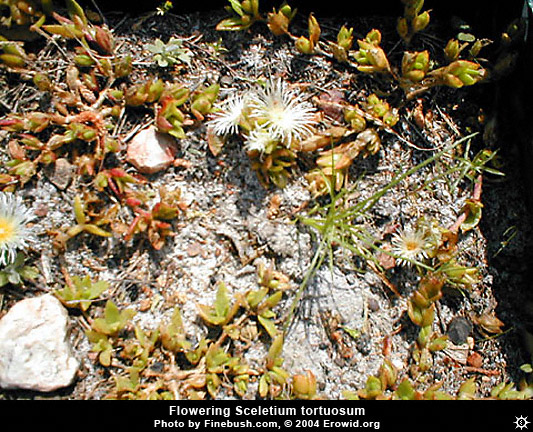
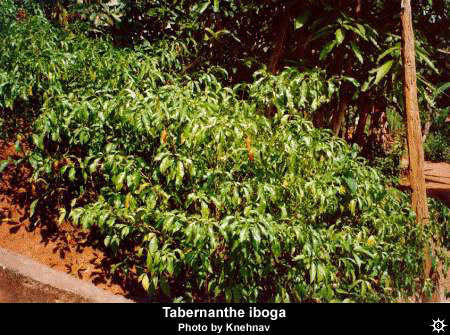


 ja vaikuttaa tosiaan hyvältä. Rupesin sitä nyt vasta selailemaan tämän threadin innoittamana, vaikka oli ollutkin koneella jo tovin.

 Se on Buddhaa.
